
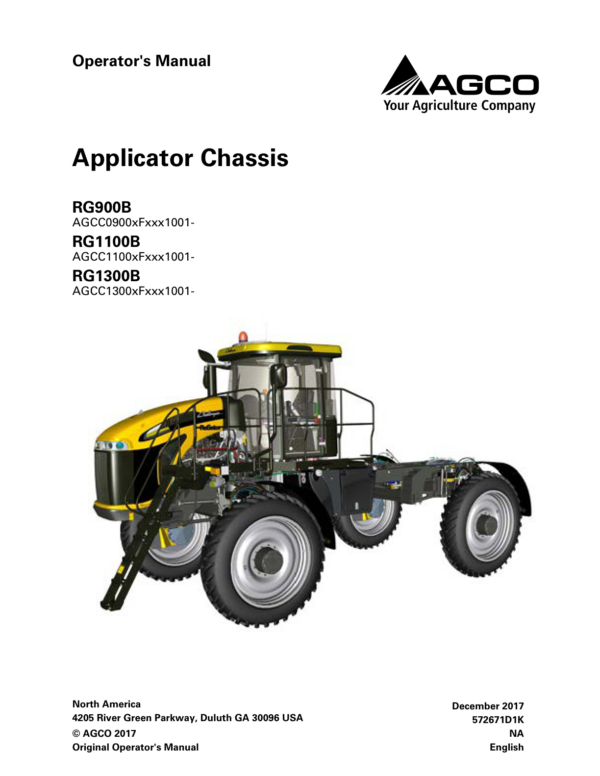
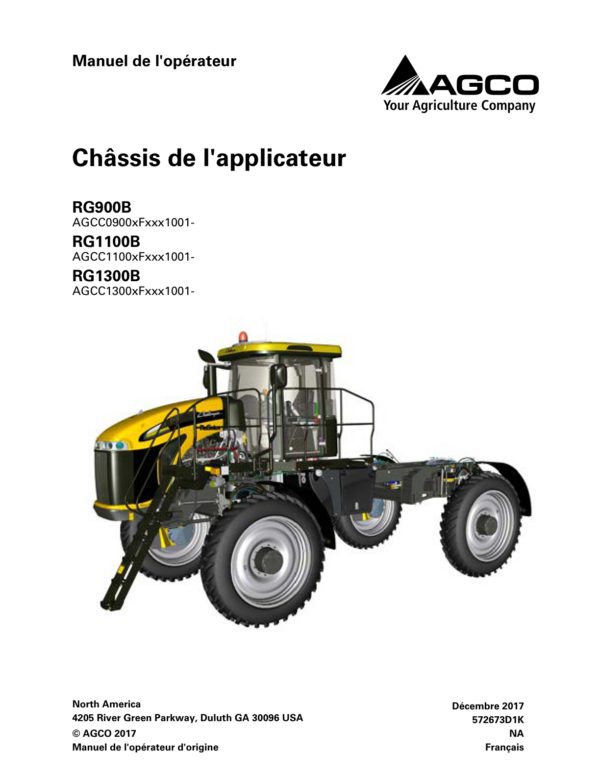
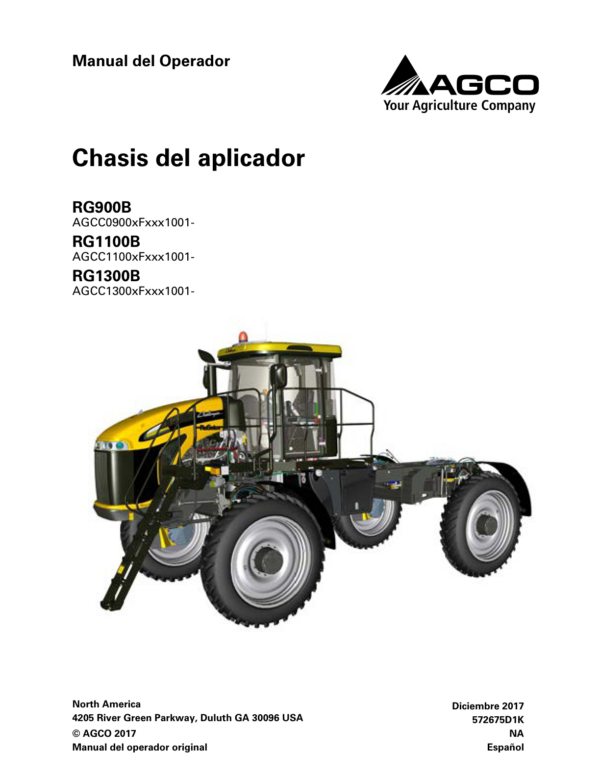
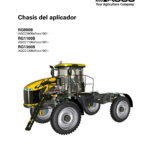
Ag-Chem RG900B, RG1100B, RG1300B Row Crop Chassis Operators Manual
$22.00
Manual Included:
- Operators Manual:
(English) (with DEF) (FXXX1001 and later) – 298 Pages
(French) (with DEF) (FXXX1001 and later) – 318 Pages
(Spanish) (with DEF) (FXXX1001 and later) – 318 Pages
Specifications:
- Brand: Ag-Chem
- Model: RG900B, RG1100B, RG1300B
- Type: Row Crop Chassis (with DEF)
- Manuals: Operators Manual
- Publication Numbers: 572671D1EN, 572671D1FR, 572671D1ES
- Language: English
- Format: PDF
- Description
- Additional information
- Reviews (0)
Description
Table of Contents:
- 1. Safety
- 1.1 A word to the operator
- 1.1.1 Safety symbol
- 1.1.2 Safety messages
- 1.1.3 Information messages
- 1.1.4 Follow safety instructions
- 1.1.5 Prepare for emergencies
- 1.1.6 Fire prevention
- 1.1.7 Prevent static discharge when fueling
- 1.2 Operate the machine
- 1.2.1 Prevent machine runaway
- 1.2.2 Use correct lamps and markers
- 1.2.3 Operation on slopes
- 1.2.4 Travel on public roads
- 1.2.5 Stopping and parking
- 1.2.6 System boom operation
- 1.2.7 Exhaust fumes
- 1.2.8 Noise prevention
- 1.2.9 Handle fuel correctly
- 1.2.10 Towing
- 1.2.11 Modifications
- 1.3 Maintenance and service
- 1.3.1 Practice correct maintenance
- 1.3.2 Chemical safety
- 1.3.3 Work in a clean area
- 1.3.4 Understand correct service
- 1.3.5 Use correct tools
- 1.3.6 Support machine correctly
- 1.3.7 Service cooling system correctly
- 1.3.8 Remove paint before welding or heating
- 1.3.9 Tires and wheels
- 1.3.10 Mobile radio installations
- 1.4 Chassis safety signs
- 1.4.1 Axle spacing right-hand
- 1.4.2 Axle spacing left-hand
- 1.4.3 Roll over
- 1.4.4 Handwash
- 1.4.5 Air dump
- 1.4.6 Ultra low sulfur diesel fuel
- 1.4.7 Fall off hazard
- 1.4.8 Pinch hazard
- 1.4.9 Tiedown
- 1.4.10 Lift
- 1.5 Electrical safety signs
- 1.5.1 Rear terminal mini fuse relay panel
- 1.5.2 Relays
- 1.5.3 Fuse / relays
- 1.5.4 Electrocution hazard
- 1.5.5 Radar hazard
- 1.5.6 Battery shut off
- 1.6 Engine safety signs
- 1.6.1 Rotating blades hazard
- 1.6.2 Burn hazard
- 1.6.3 Belt entanglement
- 1.6.4 Fuel filter
- 1.6.5 Ether
- 1.6.6 Run over hazard
- 1.6.7 High pressure hazard
- 1.6.8 Electrical hazard
- 1.6.9 Fuel water separator head
- 1.6.10 Fuel filter
- 1.6.11 Separator filter
- 1.7 Hydraulic safety signs
- 1.7.1 Pressurized fluid
- 1.7.2 Pressurized fluid
- 1.8 Cab safety signs
- 1.8.1 Read manual
- 1.8.2 Park brake
- 1.8.3 Electrical hazard
- 1.8.4 Break glass – exit
- 1.8.5 Sound horn
- 1.8.6 Cab filter number 1
- 1.8.7 Cab filter number 2
- 1.8.8 Cab filter number 3
- 1.8.9 Roll over – wear seat belt
- 1.8.10 Run over – no riders
- 2. Introduction
- 2.1 Operator Manual
- 2.2 Serial number identification
- 2.2.1 Serial number definition
- 2.3 Break-in-period
- 2.3.1 Do a check of the hydraulic system
- 2.3.2 Do a check of the wheel drive gearboxes
- 2.3.3 Coolant level
- 2.3.4 Tighten the wheel mounting hardware
- 2.3.5 Do a check of the torque rods
- 2.3.6 Do a check of the batteries
- 2.3.7 Do a check of the axle shims
- 2.3.8 Change the pressure washer pump oil – if equipped
- 2.3.9 Inspect the engine belts
- 2.3.10 Replace the fuel filter and the fuel pre-filter
- 2.3.11 Chassis and cab modification
- 2.4 Hydraulic introduction
- 2.4.1 Hydrostatic drive
- 2.4.2 Drive lever and pump and drive motors
- 2.4.3 Engine
- 2.4.4 Charge pump
- 2.4.5 Hydraulic oil cooler
- 2.4.6 Hydraulic tank and filters
- 2.5 Component locations
- 2.5.1 Hydraulic component locations
- 2.6 Fuses and relays
- 2.6.1 Rear terminal mini fuse panel
- 2.6.2 Fuse/relay panel
- 2.6.3 Four pack relay module
- 2.6.4 Battery box relays and fuses
- 2.7 Usage and disposal
- 2.7.1 Intended use
- 2.7.2 Proper disposal of waste
- 2.8 Pre-delivery checklist
- 2.9 Emissions warranty
- 2.9.1 United States and Canada emission control warranty statement
- 2.9.2 California emission control warranty statement
- 3. Operation
- 3.1 Drive the machine
- 3.1.1 Checklist before starting engine
- 3.1.2 Battery disconnect switch
- 3.1.3 Grid air heater symbol
- 3.1.4 Cold weather starting procedure for hydrostatic system
- 3.1.5 Cold start option
- 3.1.6 Diesel exhaust fluid (DEF) cold start
- 3.1.7 Restart a stalled engine
- 3.1.8 Drive the machine
- 3.1.9 Weight regulated shifting
- 3.1.10 RG1300 down shift logic
- 3.1.11 RG900 / RG1100 / RG1300 pressure compensated drive system
- 3.1.12 Speeds and terrain
- 3.1.13 Engine power limitations
- 3.1.14 Low diesel exhaust fluid (DEF)/Adblue® level
- 3.1.15 Low DEF level symbol
- 3.1.16 SCR system malfunction
- 3.1.17 Stop the engine
- 3.1.18 Remote throttle
- 3.1.19 Machine braking
- 3.1.20 Backup alarm
- 3.2 Machine management center
- 3.2.1 Home screen display
- 3.2.2 System configuration
- 3.2.3 Machine persistent area
- 3.2.4 Information boxes
- 3.2.5 Select the about information
- 3.2.6 Select the engine information
- 3.2.7 Select the transmission information
- 3.2.8 Select the tire size information
- 3.2.9 Select the radar calibration information
- 3.2.10 Select the fuel information
- 3.2.11 Select the track adjust information
- 3.2.12 Select the settings information
- 3.2.13 Select the active error codes diagnostics information
- 3.2.14 Select the stored error codes information
- 3.2.15 Operate the foam marker
- 3.2.16 Select the four wheel steer information
- 3.2.17 Maintenance schedule screen
- 3.2.18 Change the measuring units
- 3.2.19 Operational messages
- 3.3 Instruments and controls
- 3.3.1 Dash panel
- 3.3.2 Hydrostat control – 5 section boom
- 3.3.3 Hydrostat control – 7 section boom
- 3.3.4 Shift switch buttons
- 3.3.5 Armrest switches
- 3.3.6 Chassis keypad
- 3.3.7 System keypad
- 3.3.8 Adjust the mirrors
- 3.3.9 Map and dome light
- 3.3.10 Radio (if equipped)
- 3.3.11 Sun Visor
- 3.3.12 Cup holder
- 3.3.13 Storage compartments
- 3.3.14 Power port
- 3.3.15 Power outlets
- 3.3.16 Cargo net
- 3.3.17 Brake pedal
- 3.3.18 Steering wheel
- 3.3.19 Multifunction lever
- 3.3.20 Ignition switch
- 3.3.21 Lamp switches
- 3.4 Temperature control
- 3.4.1 Heater operation
- 3.4.2 Defrost or defog operation
- 3.4.3 Air conditioner operation
- 3.4.4 Automatic fan speed control
- 3.4.5 Manual fan speed control
- 3.4.6 Heater water valve
- 3.4.7 Cab air temperature sensor
- 3.4.8 Pressurizer blower
- 3.4.9 Air vents
- 3.5 Operator seat
- 3.5.1 Basic operator seat
- 3.5.2 Deluxe operator seat
- 3.5.3 Deluxe vented operator seat
- 3.6 Instructor seat
- 3.7 Four wheel steering – if equipped
- 3.8 Operational modes
- 3.8.1 Off mode
- 3.8.2 2WS mode
- 3.8.3 Auto 4WS mode
- 3.8.4 4WS mode
- 3.8.5 Crab mode
- 3.8.6 Automatic engagement and disengagement
- 3.9 Track adjust
- 3.9.1 Adjustment of track width
- 3.9.2 Adjust the manual track width
- 3.9.3 Adjust the standard hydraulic track width
- 3.9.4 Adjust the automatic track width
- 3.10 Travel on public roads
- 3.11 Air dump valve
- 3.12 Trailer the machine
- 3.12.1 Load the machine
- 3.12.2 Unload the machine
- 3.13 Tow the machine
- 3.13.1 Release the park brake manually
- 3.13.2 Re-engage the park brake
- 3.14 Optional pressure washer
- 3.14.1 Input water supply
- 3.14.2 Prime the pump
- 3.14.3 Operate the pressure washer
- 3.15 Slingshot – if equipped
- 3.16 Weather station – if equipped
- 4. Maintenance
- 4.1 Maintenance introduction
- 4.1.1 Lubricants and fluids
- 4.1.2 Lubricant filling reminders
- 4.2 Maintenance schedule
- 4.2.1 Rogator engines
- 4.2.2 Maintenance chart
- 4.2.3 Maintenance schedule
- 4.3 Engine
- 4.3.1 Do a check of the engine coolant
- 4.3.2 Do a check of the engine oil
- 4.3.3 Change the engine oil and filter
- 4.3.4 Engine belts and tensioner
- 4.3.4.1 Replace the serpentine belt
- 4.3.4.2 Replace the water pump belt
- 4.3.5 Change the air filter
- 4.3.6 How to recognize an engine with hydraulic lash adjusters
- 4.4 Exhaust system
- 4.4.1 Exhaust system temperature
- 4.5 Fuel system
- 4.5.1 Fuel tank
- 4.5.2 Fuel filtration system
- 4.5.3 Drain the additional fuel/water separator – if equipped
- 4.5.4 Change the pre-filter and fuel filter
- 4.5.5 Change the fuel water separator element – if equipped
- 4.5.6 Bleed the fuel system
- 4.5.7 Fuel storage
- 4.6 Selective catalytic reduction (SCR) System
- 4.6.1 Diesel exhaust fluid (DEF) tank
- 4.6.2 Diesel exhaust fluid (DEF) storage
- 4.6.3 Replace the supply module filter
- 4.7 Cooling package
- 4.8 Hydraulic system
- 4.8.1 Hydraulic system
- 4.8.2 Do a hydraulic oil-level check
- 4.8.3 Remove the hydraulic fluid
- 4.8.4 Replace the return oil manifold filters
- 4.8.5 Replace the charge filters – RG900 and RG1100
- 4.8.6 Replace the charge filters – RG1300
- 4.8.7 Replace the hydraulic fluid
- 4.8.8 Torque the breather cover bolts
- 4.8.9 Bleed procedure
- 4.8.10 Start up procedure – RG900 and RG1100
- 4.8.11 Start up procedure – RG1300
- 4.8.12 Diagnostic port locations
- 4.8.13 Check the charge pressure
- 4.9 Electrical system
- 4.9.1 Electrical system safety
- 4.9.2 Replace a fuse
- 4.9.3 Do a check of the batteries
- 4.9.4 Use a booster battery
- 4.9.5 Remove the battery
- 4.9.6 Install the battery
- 4.10 Chassis
- 4.10.1 Chassis lubrication
- 4.10.2 Torque rods
- 4.10.3 Do maintenance on the torque rods and hardware
- 4.10.4 Anti-roll bar
- 4.10.5 Do a check and tighten the inner axle weldment
- 4.11 Cab
- 4.11.1 Cab air filters and mounting bolt location
- 4.11.2 Cab air filters
- 4.11.3 Change the primary fresh air filter
- 4.11.4 Change the secondary clean air filter
- 4.11.5 Change the recirculation air filter
- 4.11.6 Clean the cab air filter element
- 4.11.7 Cab mounting bolts
- 4.11.8 Windscreen wiper blade
- 4.11.9 Do a check of the windshield washer reservoir
- 4.11.10 Grease armrest
- 4.12 Air system
- 4.12.1 Drain the air tank
- 4.12.2 Replace the desiccant cartridge
- 4.13 Tires
- 4.13.1 Tire service
- 4.13.2 Rotate the tires
- 4.13.3 Tire safety loads and pressure
- 4.13.4 Maximum tire load for specified speed
- 4.13.5 Example tire inflations for standard machine configurations
- 4.13.6 Determine the load per tire
- 4.13.7 Replace a tire on a rim
- 4.13.8 Remove the wheel
- 4.13.9 Install the wheel
- 4.13.10 Tighten the wheel mounting hardware
- 4.14 Wheel motor gear box
- 4.14.1 Do a check of the gearbox oil level
- 4.14.2 Fill the gearbox oil
- 4.14.3 Maintenance information
- 4.14.4 Drain and replace the oil
- 4.14.5 Do a check of the wheel drive gearbox mounting hardware
- 4.15 Wheel alignment
- 4.15.1 Adjust the two wheel steer toe-in
- 4.15.2 Adjust the four wheel steer toe-in
- 4.15.3 Toe-in values
- 4.16 Adjust a crop deflector
- 4.17 Pressure washer – if equipped
- 4.17.1 Do a check of the pressure washer pump motor oil
- 4.17.2 Change the pressure washer strainer
- 4.17.3 Winterize the pressure washer system
- 4.18 Machine storage
- 4.18.1 Store the machine
- 4.18.2 Operate the machine after storage
- 5. Troubleshooting
- 5.1 Engine Troubleshooting
- 5.1.1 Low diesel exhaust fluid (DEF) level
- 5.2 Heating and cooling troubleshooting
- 5.3 Fault code reference
- 6. Specifications
- 6.1 Chassis specifications
- 6.1.1 Machine dimensions
Additional information
| Option | (with AP74 and AP84 Engine) (FXXX1001 and later), (English) (with DEF) (FXXX1001 and later), (French) (with DEF) (FXXX1001 and later), (Spanish) (with DEF) (FXXX1001 and later) |
|---|
Be the first to review “Ag-Chem RG900B, RG1100B, RG1300B Row Crop Chassis Operators Manual”
You must be logged in to post a review.
Reviews
There are no reviews yet.